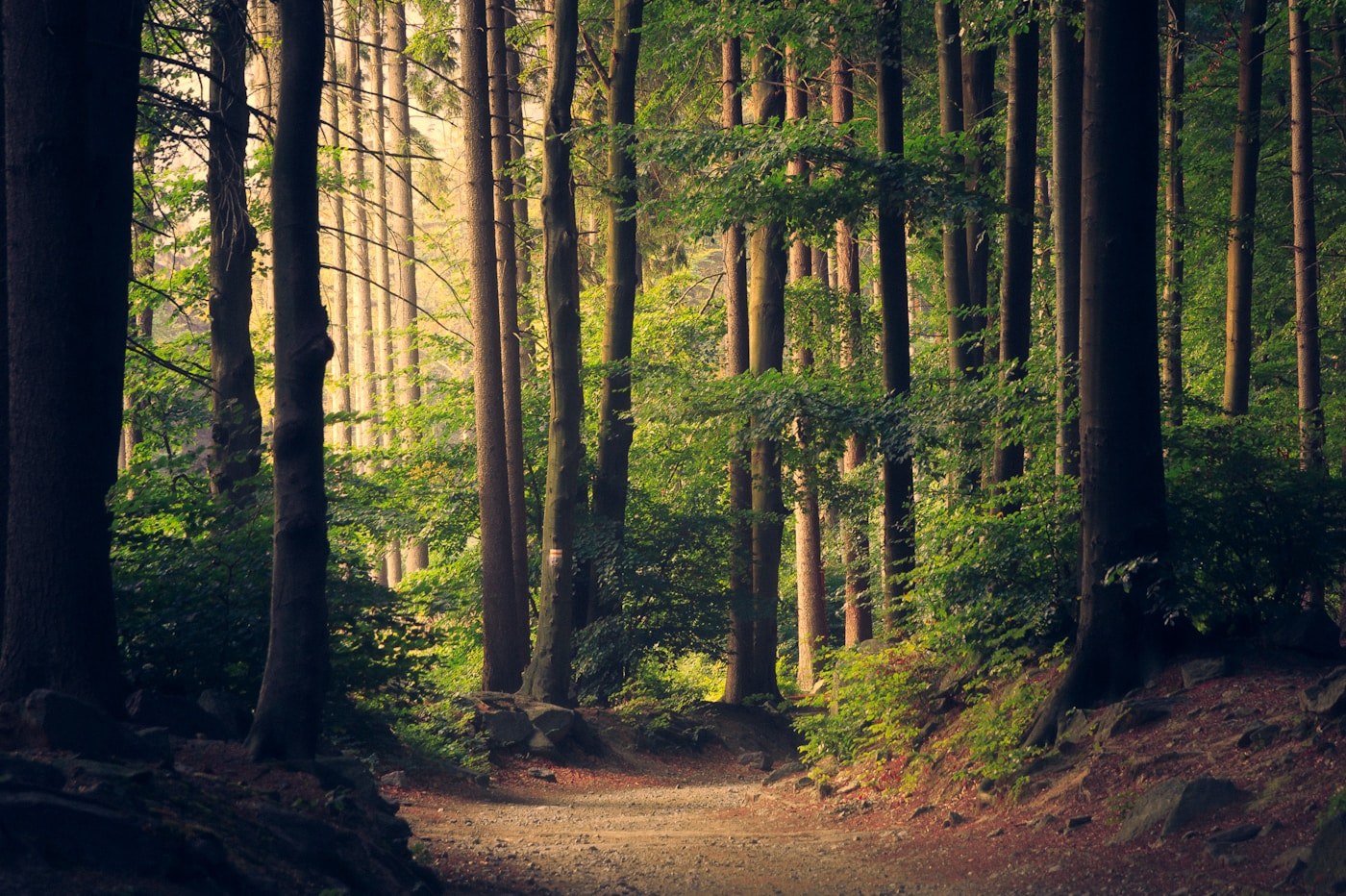
I missed my turn on purpose at the junction near Block 480.
Not lost — redirected. The direct route home from the library would have taken me along the avenue, past the bus interchange and the familiar shopfronts, twenty minutes of pavement I could walk with my eyes half-closed. Instead I cut onto the park connector, the red path that runs like a seam between the HDB blocks and the green belt leading toward Zhenghua Park. I had no appointment to keep. The afternoon belonged to the long loop.
The connector changes texture within the first hundred metres. Asphalt gives way to the rubberised red surface, slightly springy underfoot, bordered by low shrubs that the town council trims with geometric patience. Cyclists pass with bell chirps — polite, not urgent. A woman power-walks with arms bent at textbook angles. The air carries cut grass and something darker from the canal that runs parallel on the left, that rich smell of slow water under shade.
I walk without earphones. This is a rule I break often elsewhere but keep on this path, because the connector asks for ears as much as eyes. You hear the difference between a mynah and a bulbul if you let the other sounds settle first — the distant MRT hum, the rustle of leaves, the occasional creak of a bicycle chain. The estate noise thins. Blocks recede behind trees. For a stretch it feels possible that Singapore is mostly green, which is not true numerically but feels true when you are on the path.
At the canal bend I saw the egret.
One bird, white against the grey-green water, standing with the absolute stillness of something that has nowhere else to be. It did not startle when I slowed. It watched the surface, one foot lifted slightly, a posture that looked like patience made visible. I stopped on the path and matched my breathing to its lack of movement. A cyclist swerved around me without comment. The egret shifted a step, dipped its beak, came up empty, stayed anyway.
I think about that more than I should — the staying anyway. The canal is not pristine. Plastic bottles collect at the culvert. The water moves with a faint oily sheen after rain. And still the bird stands there, treating the patch as sufficient. I am not romantic enough to call it a lesson. I only note that I stood longer because the bird did, and when I finally walked on my shoulders had dropped half an inch without my permission.
Zhenghua Park opens wider — exercise corners, the elderly cluster on benches, children on scooters tracing loops their parents pretend not to count. I took the long loop as promised, past the fitness stations where the metal bars hold the heat of the afternoon, past the signboard with the map I never read because the path is circular and forgives wrong turns. Bukit Panjang sits on one side of the green, Choa Chu Kang on the other. The park connector stitches them the way a backstitch holds two pieces of fabric — visible if you look, invisible if you do not.
By the time I exited near the avenue again, the light had shifted to that late green-gold that makes every leaf look lit from within. My shirt was damp at the back. My phone had three missed notifications I would read later and probably forget. The blocks looked the same as when I left them, which was the point — to return to the familiar with something loosened inside the chest.
I bought a cold soy milk from the minimart at the foot of my block. The auntie put it in a bag without asking. I drank half on the lift up, the condensation cold on my fingers. The egret was still somewhere by the canal, or not. The path would be there tomorrow for another seam if I needed one.